Product development
Why hardware startups stall at prototype
The prototype isn't the hard part. Everything after it is.
By Peter Sords··3 min read
The short answer
Hardware startups stall at prototype because a working prototype proves the physics, not the product. Manufacturability, certification, field reliability and most of the production firmware are still unbuilt. The teams that ship treat prototype-to-production as its own engineering program: an architecture review before the first production schematic, a firmware plan, an early DFM conversation, and a regulatory pre-scan.
I've watched a dozen hardware startups hit the same wall.
They raise money. They build a prototype that works on the bench. Then they spend 18 months stuck: burning cash, swapping engineers, and wondering why "almost done" never becomes "shipping."
The prototype isn't the hard part. Everything after it is.
The prototype trap
Most founders treat the prototype as proof that the technical risk is behind them. It's actually the opposite. A working prototype proves the physics. It says nothing about whether you can manufacture it, certify it, or keep it working in the field for five years.
The real engineering starts when you ask: "How do we make 10,000 of these?"
That question touches power architecture, thermal management, test coverage, supply chain, regulatory compliance, and firmware that doesn't brick itself during an OTA update. None of that exists in your prototype.
Three mistakes that kill momentum
1. Skipping the architecture phase
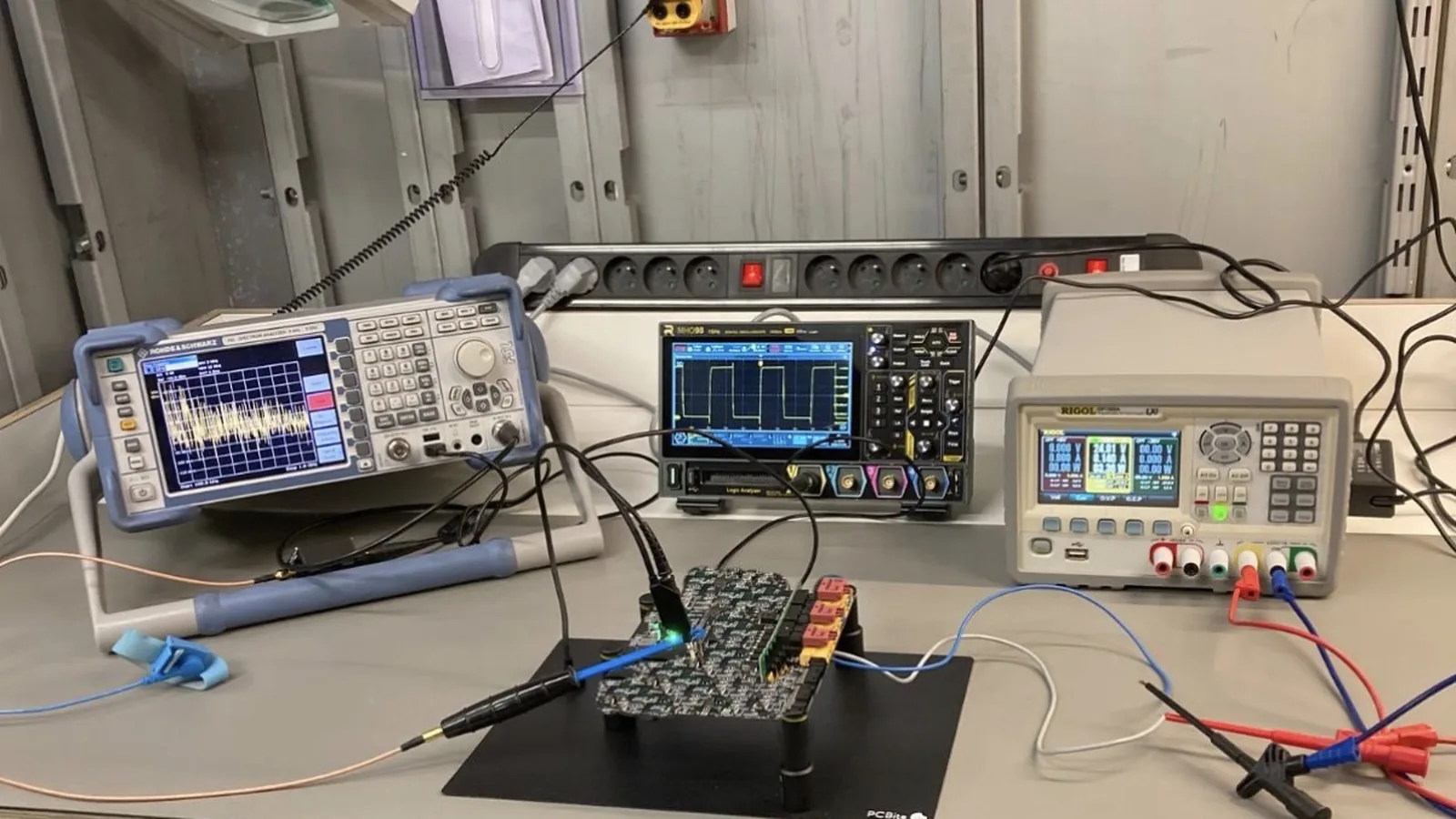
A prototype can be held together with dev boards and jumper wires. A product cannot. The gap between "works on my bench" and "passes EMC testing" is an architecture problem: power distribution, grounding strategy, signal integrity, enclosure design. Teams that jump straight to "shrink the prototype onto a PCB" end up doing three board spins instead of one.
2. Underestimating firmware complexity
The demo firmware that runs your prototype is maybe 15% of the production firmware. The other 85% is error handling, bootloaders, OTA updates, watchdog recovery, power management, communication protocol edge cases, and manufacturing test modes. It isn't glamorous work, but it's what separates a demo from a device.
3. Treating certification as a checkbox
IEC 60601. FCC Part 15. UL/CSA. ISO 13485. These aren't things you "handle at the end." Every one of them has design implications that need to be built in from the architecture phase.
I've seen teams reach regulatory testing and discover their grounding scheme needs a full board redesign. That's a six-figure mistake and a six-month delay, because nobody asked the question early enough.
What good execution looks like
The teams that get through this phase quickly share a pattern. They treat the prototype-to-production transition as its own engineering program, with its own requirements, its own schedule, and its own discipline. That means:
- A real architecture review before the first production schematic.
- A firmware plan that accounts for the 85% you haven't written yet.
- A DFM conversation with your manufacturer before you finalize the mechanical design.
- A regulatory pre-scan that catches the big issues while they're still cheap to fix.
None of this is exotic. It's just rigorous. And rigor is what separates teams that ship in 12 months from teams that are still iterating at month 30.
The real cost
Every month stuck in the prototype-to-production gap costs a startup $50K to $150K in burn, plus things that are harder to put a number on: team morale, investor patience, and market timing.
The irony is that the fixes are almost always cheaper than the delay. A proper architecture phase costs a fraction of six months of burn, and it can save those six months. A regulatory pre-scan might cost a few thousand dollars and prevent a $200K board redesign.
The math is simple. The discipline to do it is the hard part.
The bottom line
If you're building a hardware product and your prototype works, congratulations. You've finished the easy part.
The question now is whether your next step is architecture or hope. One of those has a track record.
About the author
Peter Sords is the founder and Director of Engineering at Kyros Engineering, a senior-led electronics, PCB, embedded firmware and hardware product development firm in Cleveland, Ohio. More about Kyros
Frequently asked
Why do hardware startups stall after building a working prototype?
Because a working prototype proves the physics, not the product. Manufacturing, certification, field reliability and most of the production firmware all start after the prototype works. Teams that treat that transition as finishing up, rather than as its own engineering program, lose months to board spins and redesigns.
How much of the production firmware does a prototype's demo firmware cover?
In Peter Sords's experience, roughly 15%. The other 85% is error handling, bootloaders, OTA updates, watchdog recovery, power management, communication protocol edge cases and manufacturing test modes.
When should a hardware startup plan for FCC, UL or IEC 60601 certification?
At the architecture phase, before the first production schematic. Each standard carries design implications, such as grounding, isolation and filtering, and finding them at test time can mean a full board redesign.